Kids should only use an underwater scooter if the maker’s age guidance allows it, they swim confidently, and an adult stays within arm’s reach. Start in calm, shallow water at the lowest speed, keep hands and hair away from the propeller, and never let a child hold their breath to go further. Always follow the manual for your exact model.
Underwater scooters are great fun, and many families want to share the experience. They also add speed, moving parts, and a pull through the water that kids do not meet when they simply swim. This guide gives you 12 clear rules, explains the reasons behind them, and shows how to prepare before the first trip.
Is an Underwater Scooter Right for Your Child?
There is no single age that suits every scooter. The answer depends on the model, the child’s size, strength and swimming ability, and the water you plan to use.
Here is how widely guidance varies. Technical dive scooters, such as the models made by Seacraft, state that people under 18 must not operate them and that they should be kept away from children. Some lighter recreational sea scooters are sold with a lower age rating, for example, 8 and up on some retail listings. A scooter guide from Waydoo, another manufacturer, sets no minimum age at all. It says children need active adult supervision and that the scooter should suit the child’s size, strength, and water setting.
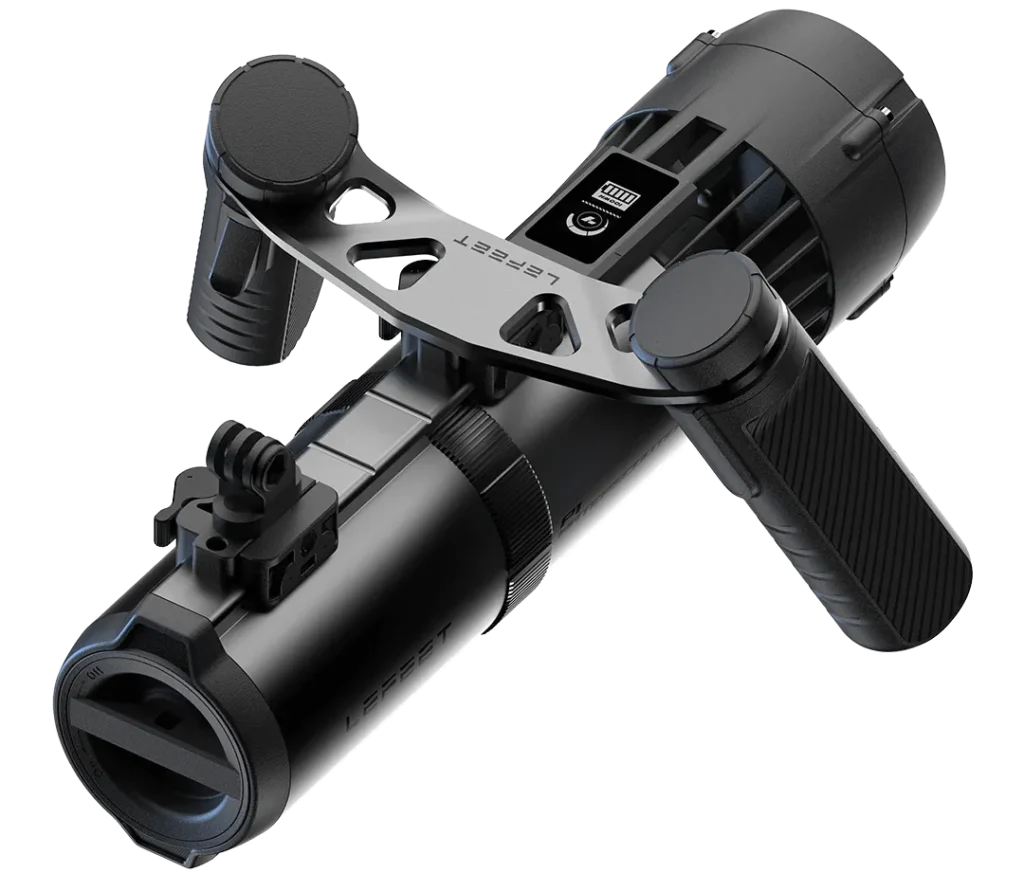
Because the range is so wide, treat the manufacturer’s manual as the final word. If a manual does not give an age, or you are not sure, treat the scooter as an adult-supervised activity and ask the seller. Our Lefeet underwater scooters are designed for snorkelers, divers, and paddleboarders, so if you are thinking about a child using one, contact our team and we will help you check what suits your family.
What Safety Rules Kids Should Follow When Using an Underwater Scooter
1. Follow the age and size guidance for that exact model.
Never assume an adult scooter is fine for a child just because it is small. Check the manual, the age rating, and the weight and size limits, and do not borrow a scooter you have no manual for.
2. Only swim with a scooter if you are a confident swimmer.
A scooter is not a flotation device, and it does not replace swimming skills. Waydoo’s guide stresses that a scooter is not a good fit for someone who cannot swim and is not a rescue device. Swim lessons lower the risk but do not remove it, so strong swimmers still need supervision.
3. Wear the right safety gear.
Children who cannot swim should wear a properly fitted, approved life jacket, and everyone should wear one on a boat. Mass.gov’s child water safety guidance points out that armbands, noodles, and inflatables are toys, not lifesaving equipment. Add a well-fitting mask and snorkel if the child will be face down in the water.
4. Keep an adult within arm’s reach.
Drowning is fast and quiet. The same Mass.gov guidance says it can take as little as 20 seconds for a child to slip below the surface. Pick one adult to be the “water watcher” who does nothing else, no phone, and no reading, and swap the role between adults so the job is never assumed. For young divers, the Divers Alert Network (DAN) recommends staying within arm’s length of a capable adult, with a buddy setup of two adults and one child for open water.
5. Start in a pool or very shallow, calm water.
Learn the controls where the child can stand. Practice starting, stopping, and steering in a pool or a calm, clear area before going anywhere deeper. Avoid places with currents, boat traffic, rocks, or jetties.
6. Begin at the lowest speed.
Waydoo recommends the lowest speed until handling feels natural. Seacraft’s own guidance is to keep a medium speed even for qualified adult divers. A child should never be encouraged to go faster than they can control or stop quickly.
7. Keep hands, hair, and loose items away from the propeller.
Before every use, tie long hair back and check that straps, bracelets, and loose clothing cannot reach the nozzle. Keep fingers and body parts away from the propeller area, and never carry or hand over the scooter by the nozzle. Switch it off whenever it is being carried, adjusted, or handed to someone else.
8. Stay on the surface or at a shallow, constant depth.
Seacraft advises using a scooter only horizontally at a steady depth and not using it to go up or down. For a child, the safest approach is surface snorkeling or very shallow water that the adult can easily reach. Never go beyond the scooter’s depth rating, and do not use a scooter with scuba gear without proper dive training. Scuba is a separate skill set.
9. Never hold your breath to go further, and no breath-hold games.
This one matters more than most parents realize. Children’s hospital guidance from CHOC explains that shallow water blackout is a sudden loss of consciousness from low oxygen, and it often comes with no warning. Hyperventilating before going under delays the urge to breathe, which makes it more dangerous. A child who faints underwater can inhale water, and a watcher on the shore may not notice. Teach children never to take breath-holding challenges with a scooter and to surface the moment they feel the need to breathe.
10. Keep sessions short and watch for tiredness and cold.
Kids tire and chill faster than adults, even in warm water. Seacraft notes that divers who scoot for a long time can become fatigued or cold and may need help getting out. Take regular breaks, offer water and a snack, and end the session at the first sign of shivering, tiredness, or fear.
11. Tell an adult straight away if something feels wrong.
Teach children to stop, switch off the scooter, and signal if they feel dizzy or panicky or have ear or sinus pain, or if the scooter jams or shuts down. DAN’s review of emergency calls involving minors found that ear and sinus problems were the most common diagnosis and that panic and rapid ascents were behind many lung injuries. If the scooter stalls or gets stuck in weeds or a net, end the session and do not try to fix it in the water.
12. Store and charge the scooter safely out of reach.
An unattended scooter is a hazard. Seacraft advises never leaving one where children or untrained people can reach it. Switch it off, remove or isolate the battery if the model allows, check the battery before the next use, and use only original parts. Do not modify or repair it yourself.
Before You Go: A Parent’s Pre-Dive Checklist
- I have read the manual and checked the age and size guidance for this model.
- My child can swim confidently and wears an approved life jacket if needed.
- One adult is the dedicated water watcher.
- The water is calm, shallow, clear and free of strong currents and boat traffic.
- Hair is tied back and no loose straps or jewelry can reach the propeller.
- The battery is charged and the scooter is set to the lowest speed.
- We have agreed on hand signals and a “stop and tell me” rule.
- Sun protection, drinking water and shade are ready.
- A phone is within reach and an adult knows how to call for help and perform CPR.
Staying Safe in UAE Conditions
The UAE’s warm weather is ideal for the water, but it adds a few extras to think about.
- Heat and sun. Kids can overheat quickly. Use shade, sun protection and plenty of water, and plan sessions for cooler parts of the day.
- Batteries. Keep scooters and batteries out of direct sun and a hot car between swims, and follow the manufacturer’s temperature guidance.
- Choose calm, sheltered places. Pools, protected lagoons and quiet beaches are better than open, busy water with boat traffic.
- Know the local emergency number. Keep a phone with you, and make sure at least one adult knows how to start CPR.
Frequently Asked Questions
Are underwater scooters safe for kids?
They can be safe when used with the right model, supervision, and rules, but the risks are real. The main ones are the propeller, breath-holding, tiredness, currents, and drowning.
Can a child use an underwater scooter if they cannot swim?
No. A scooter is not a floatation device or a rescue tool. Children who cannot swim should stay out of deeper water and should not rely on a scooter for support.
What speed should a child use?
The lowest setting, and only until handling feels natural. Do not let a child increase speed until they can start, steer and stop confidently.
Final Thoughts
So, what safety rules should kids follow when using an underwater scooter? Check the age guidance, make sure they swim confidently, keep an adult within arm’s reach, start slow in calm shallow water, protect against the propeller, and never hold their breath for distance. Short sessions, the right gear, and safe storage complete the picture.
Scooters can make time in the water a wonderful shared experience, and good habits at the start make it safer and more enjoyable. If you have questions about choosing a scooter, contact Frogmen Technologies today!